An illustrated historical companion · France, 1519–1949
A palace built for a king. A refuge for a nation.
Chambord’s architecture gets the spotlight. These are the human stories behind it: a captive king, two boys held in his place, and the people who turned a hunting château into a lifeboat for art.
The film shows how Chambord was built. Here’s what happened around it.
The Absolute History documentary spends its 51 minutes largely on engineering, Leonardo’s possible influence, and the building campaign. Its mention of art hidden here lasts roughly half a minute; the king’s captivity gets a little more. This companion follows those two threads, with an indexed auto-caption transcript kept separate so the stories don’t repeat the film.
The film is a prompt, not the authority. Dates and claims below are checked against Chambord, Louvre, and Musée Condé records. How the sourcing works ↘
01 / The ransom1525–1530
The royal ambition interrupted
The king came home. His sons did not.
When François I was captured at Pavia, Chambord’s construction stalled. The bargain that freed him carried a human price: two children sent to Spain as hostages.
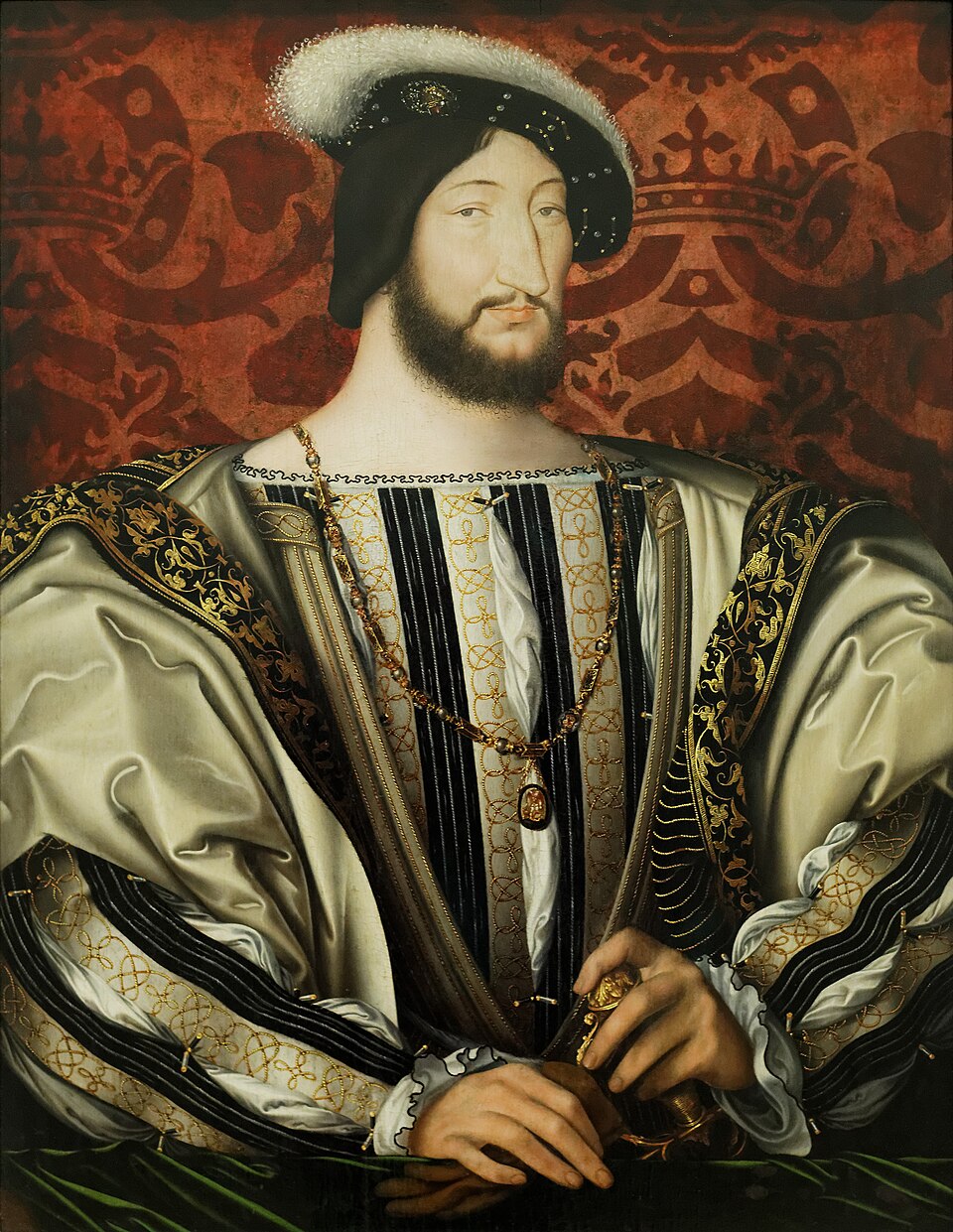
François I, painted by Jean Clouet · public domain ↘
Work on Chambord began on 6 September 1519. François wanted a château that could impress other rulers as surely as it delighted a hunting party. But in 1525 his campaign in Italy ended in defeat at the Battle of Pavia. Captured by Emperor Charles V’s forces and taken to Madrid, he could no longer finance his showpiece. Building paused. 23
After about a year in captivity, François signed the Treaty of Madrid in 1526, surrendering French claims in Italy. He was allowed to return to France, but his two sons—the dauphin François and his younger brother Henri—were handed over to guarantee the terms. Henri would one day be king; at the time, both were children. François disavowed a treaty extracted under duress, and the boys remained in Spanish custody for roughly four years. The château’s story of royal ambition is inseparable from their absence. 26
The path out came through diplomacy conducted by two women: Louise of Savoy, François’s mother, and Margaret of Austria, Charles V’s aunt. Their negotiations produced the Peace of the Ladies at Cambrai in 1529; the princes’ captivity ended in 1530. The agreement also bound François to marry Charles’s sister, Eleanor of Habsburg. The war did not stay settled for long, but the children finally came home. 26
1519Chambord’s construction begins
1525Pavia: the king is captured
1526He returns; his sons become hostages
1529Louise and Margaret negotiate peace
1530The princes’ captivity ends
1539
Years after his captivity, François received his former captor Charles V at Chambord. The still-developing château was intended to astonish him. A building once halted by defeat became a stage for royal prestige. 3
02 / The art refuge1938–1949
The other life of a château
From sorting station to sanctuary.
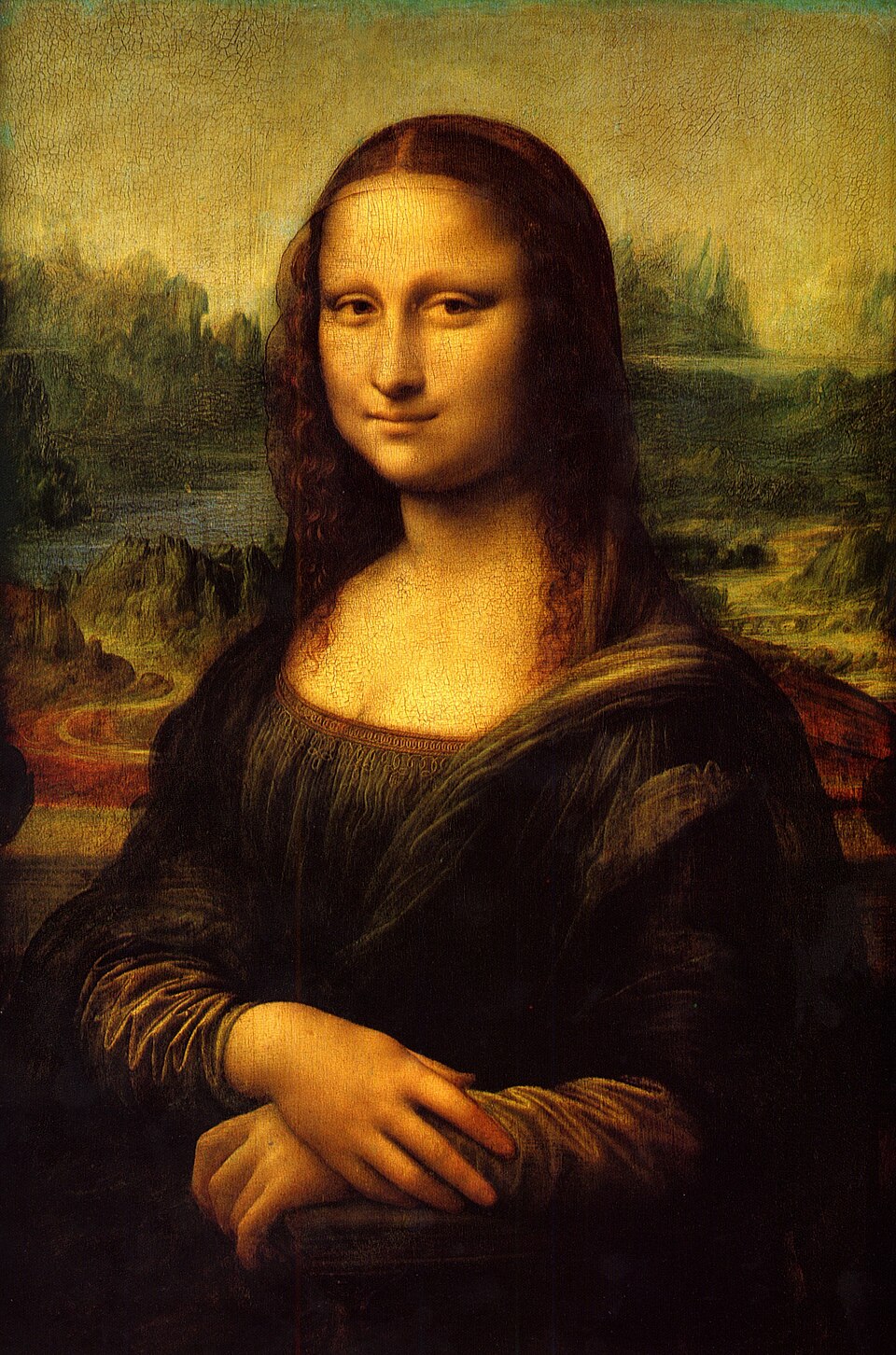
In the film, the Mona Lisa’s presence becomes a surprising fact. The deeper story is an evacuation network: trains and trucks, inventories and guards, difficult compromises, and one village placed in mortal danger.
1938–39
Plan first. Pack next.
Jacques Jaujard’s national museums administration planned refuges away from strategic bombing targets before war began. Chambord had space and strong floors, but doubts about security meant it was initially chosen as a sorting station, not a permanent hiding place. Paris ordered evacuation on 27 August 1939; the Mona Lisa left the Louvre the next day. In four months, 51 convoys carried works to 11 châteaux and abbeys, 40 of them to Chambord. 14
01
June 1940
The stopover becomes the depot.
With invasion and retreat making roads perilous, Chambord held too much art to move safely farther south. Custodians kept it there. As other refuges were abandoned, Chambord grew into the largest of 83 wartime depots, holding 4,000 cubic metres of packed works in 1944. That is a volume, not a count of 4,000 artworks—or even necessarily 4,000 crates. Each arrival was checked against departure inventories; works were inspected, maintained, and sometimes restored. 1
02
1940–41
Not a secret from the occupiers.
The goal was chiefly to prevent destruction, not to hide the depot’s location. German authorities soon knew the refuge map; a German sentry guarded Chambord’s entrance from August 1940. More troublingly, Jewish collectors had entrusted some works to French museums for protection, yet 16 crates from Jewish-owned collections were seized at Chambord on 7 July 1941 despite museum officials’ protests. The story of saved public collections cannot erase the story of looted private property. 1
03
1941–44
People, not just thick walls.
Depot chief Pierre Schommer drilled his guards against fire. Many were First World War veterans with serious injuries, yet Chambord’s exhibition credits their training and equipment. A 1941 drawing by curator Hans Haug, preserved in the Louvre’s collection, records a room crowded with crates. In June 1944 an American plane crashed near the château; three days later, a separate incident sparked a forest fire. Fire was no abstract threat. 15
04
21–22 Aug 1944
The village pays the price.
Retreating German troops entered the park and were attacked by French Resistance fighters. The troops burned village buildings, threatened the château, and seized roughly 40 civilian hostages. Local people—including Schommer and the priest—worked to free them and preserve the castle. They could not prevent nine deaths among Chambord’s residents. The troops left on 22 August. To tell only of paintings surviving these days would miss the people who did not. 1
05
1945–49
Returning was its own operation.
Works began leaving Chambord in January 1945; the château reopened to visitors on 13 April 1946. Returns from the refuge continued through late 1949. The depot’s holdings were returned without a recorded loss in Chambord’s account, but that is a narrower claim than saying wartime art theft was resolved. The same dossier reports 61,257 works recovered in Germany and Austria, with roughly 45,500 returned to owners or heirs by December 1949—work to which Rose Valland was central. The search for owners of remaining looted works continued. 14
06
Two journeys, not one warehouse
Follow the art.
“At Chambord” doesn’t mean “at Chambord for the war.” Select an object to see why the route matters.
The Mona Lisa left Paris on 28 August 1939. According to Chambord’s exhibition dossier, she passed through Chambord four times as custodians moved her among other refuges—including Louvigny, Loc-Dieu, Montauban, and Montal—before her return to the Louvre in June 1945. Chambord was one stop in a moving rescue, not a sealed vault where the painting sat untouched for six years. 14
ParisChambord × 4Other refugesLouvre
7.16 m wide
02 / Théodore Géricault
A painting that blacked out Versailles.
The 7.16-metre-wide Raft of the Medusa could not travel like an ordinary crate. On a truck used for theatre scenery, it caught a tram wire in Versailles, short-circuiting power and darkening part of the city. It went on to other wartime refuges; the Louvre’s object record traces its route via Louvigny and Sourches. This is part of the same evacuation system, not evidence that the painting was stored at Chambord. 147
ParisVersaillesLouvignySourches
Between the lines
What the stones can’t tell you.
01
Was Leonardo the architect?
The film leans confidently into his design. Chambord’s own 2019 exhibition called Leonardo’s direct authorship a hypothesis supported by clues, not a surviving signed plan. The building is real; certainty about its original architect is not. 3
02
A room full of crates, drawn from life
Hans Haug’s October 1941 sketch, identified in the Louvre’s catalog and discussed in Schommer’s correspondence, gives the depot a human scale: a room cluttered by the objects its caretakers had to protect, count, and move. 5See the catalog record ↗
03
A rescue with an unfinished moral ledger
Chambord’s guardians saved thousands of public objects. At the same site, Jewish-owned crates were taken. Preservation and restitution are related histories, but one cannot stand in for the other. 1
The companion film
Keep the documentary and the deeper story side by side.
The complete auto-caption reading transcript is linked to video timecodes; use your browser’s Find command to search it. Start at 03:41 for the art-refuge mention or 23:40 for François’s capture.
51:09 / the filmArchitecture has its secrets. History has more.
Château de Chambord: Da Vinci’s “Impossible” Project↗
Notes & provenance
Follow the evidence.
Numbered links throughout the page point here. The principal wartime source is Chambord’s own detailed exhibition dossier; Louvre records add independent checks. Film captions are identified separately because automatic transcription can mishear names or dates.
Chambord, 1939–1945: Sauver un peu de la beauté du Monde — official exhibition press dossier, especially pp. 4–10. Read PDF ↗
Domaine national de Chambord, François I, the Knight and the King — official educational text, pp. 1–2. Read PDF ↗
Domaine national de Chambord, Exhibition: Chambord, 1519–2019 — construction date, Pavia interruption, Leonardo hypothesis, Charles V’s 1539 visit. Read page ↗
Musée du Louvre, Les Mémoires de guerre du Louvre — Jaujard’s plan, the Mona Lisa’s departure, wartime movements and restitution context. Read page ↗
Louvre Collections, Hans Haug’s 1941 Chambord crate-room drawing — catalog record RF 32154, with Schommer’s 7 October 1941 letter. View record ↗
Musée Condé, Henri II enfant — the two princes’ captivity in Spain, 1526–1530. Read record ↗
Louvre Collections, Le Radeau de la Méduse — object dimensions and wartime route. View record ↗